Article
The James Webb Paradigm: How Early Galaxies are Challenging Cosmic Evolution
May 23, 20262 min read
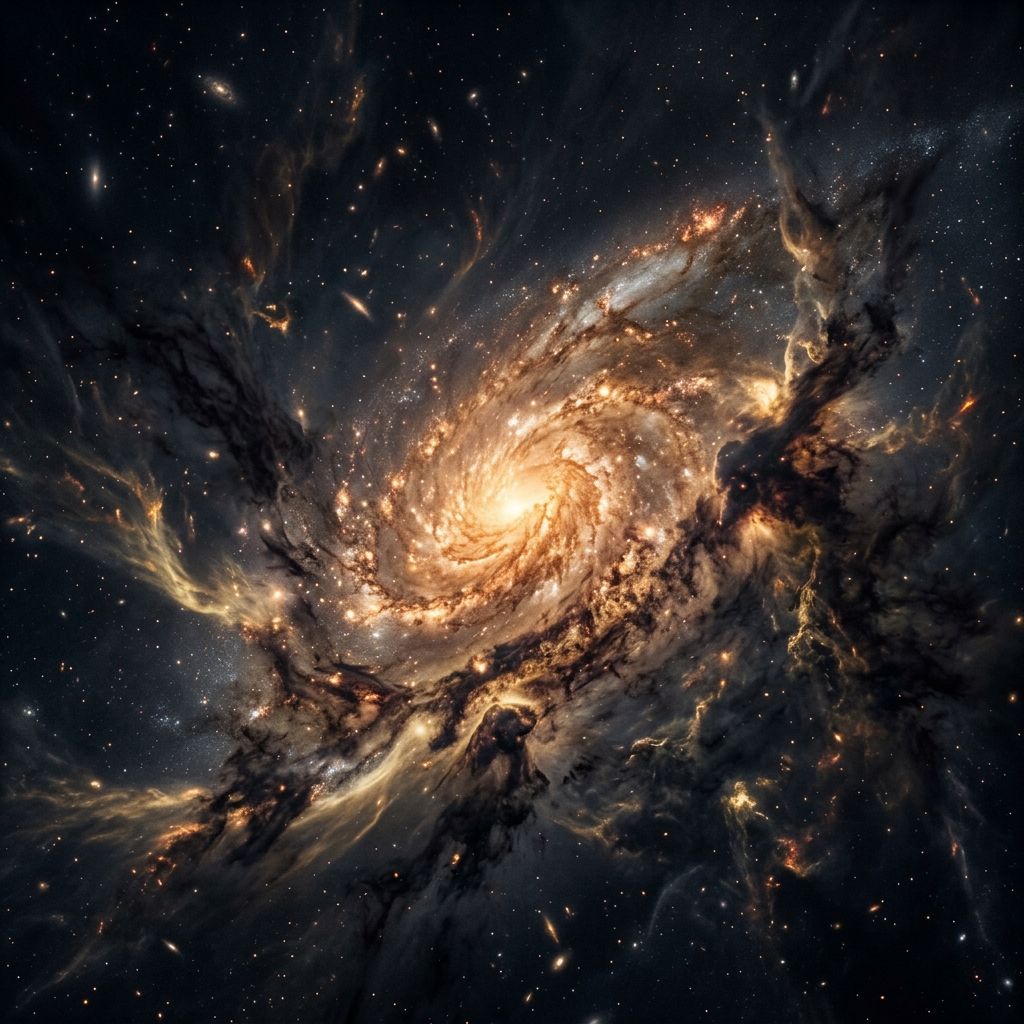
For decades, the standard cosmological model predicted that the universe evolved gradually. Following the Big Bang, matter was expected to clump slowly over billions of years, beginning with small, chaotic protogalaxies that gradually merged into the massive, organized spiral structures we see today. The launch of the James Webb Space Telescope (JWST) was supposed to verify this cosmic timeline by peering into the deep past to observe these initial, infant stars.
Instead, JWST returned images that shattered these expectations. In the furthest reaches of observable space, representing a time just 300 to 500 million years after the Big Bang, astronomers discovered massive, mature, and highly structured galaxies. These objects, containing billions of stars, are as bright and developed as modern galaxies. According to standard cosmological equations, there simply was not enough time for gravity to draw that much matter together so early in cosmic history.
This cosmological mismatch has triggered a quiet revolution in astrophysics. Researchers are now forced to explore hypotheses that were previously relegated to the theoretical fringe. Some suggest that dark matter behaves differently in the early universe, accelerating the collapse of gas clouds. Others hypothesize that primordial black holes—created in the dense plasma of the Big Bang itself—acted as gravitational anchors, pulling gas together at speeds previously thought impossible.
For the thinking man, this paradigm shift is a masterclass in the scientific method. Science is not a fixed dogma; it is an active, self-correcting conversation between theory and observation. The discovery of these "impossible" early galaxies is not a failure of physics, but a triumph of exploration, exposing the limits of our understanding and inviting us to build a more accurate map of reality.
As we look deeper into the cosmos, we are forced to discard comfortable assumptions. The universe's early timeline is far more dynamic, creative, and rapid than we imagined. By facing these anomalies with rigorous skepticism and open wonder, we continue the ancient human tradition of decoding the cosmic architecture, reminding ourselves that the search for truth is an ongoing journey with no final destination.
Further Reading & Intellectual Resources
We recommend studying the source texts below to further explore the scientific principles or philosophical arguments detailed in this dispatch.
Outlive: The Science and Art of Longevity
by Dr. Peter Attia
A comprehensive clinical manual for optimizing metabolic, cardiovascular, and cognitive healthspan.
Why We Sleep: Unlocking the Power of Sleep and Dreams
by Dr. Matthew Walker
Explores the neurobiology of sleep architecture, memory consolidation, and glymphatic waste clearance.