Article
The Epigenetic Clock: Deciphering the Methylation Blueprints of Biological Age
May 23, 20262 min read
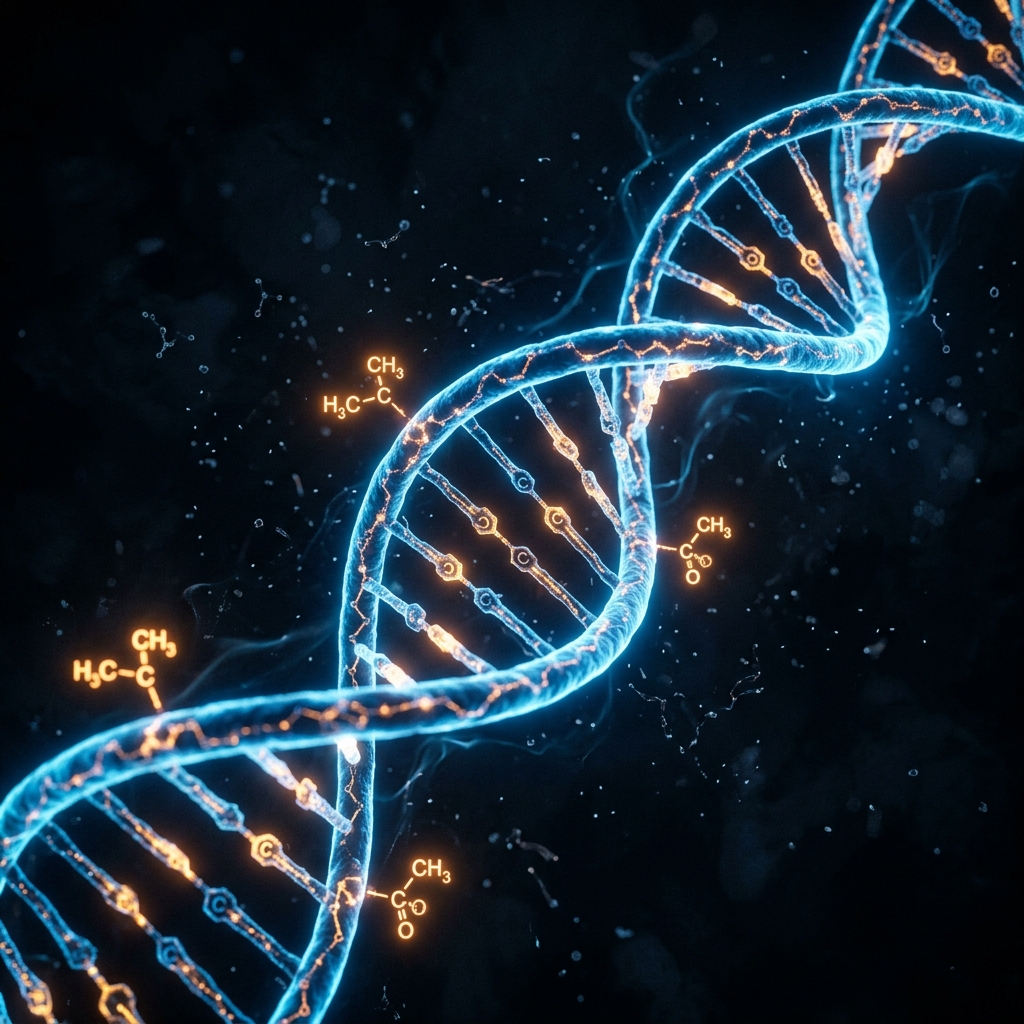
For centuries, aging was defined strictly by the calendar. We counted years, assuming that decay was a linear, unstoppable march. However, modern longevity science has revealed that chronological age—the number of times you have orbited the sun—is a crude and often inaccurate metric of physiological health. The true pace of aging is biological, written in the subtle chemical annotations of our genome. This is the domain of epigenetics, where scientists have discovered how to read the cellular calendar using what is known as the Epigenetic Clock.
At the center of this discovery is DNA methylation, a process where tiny chemical tags called methyl groups attach to specific locations on our DNA. These tags act like volume knobs, turning genes up or down without changing the underlying genetic sequence. As we age, our methylation patterns change in a highly predictable, systematic manner. In 2013, UCLA researcher Steve Horvath developed a mathematical algorithm that analyzes these methylation sites across various tissues, predicting a person's biological age with astonishing accuracy, often within a few years.
The ability to measure biological age has transformed medicine from a reactive discipline into an empirical science of longevity. Instead of waiting decades to see if a therapy extends life, clinical trials can now use epigenetic clocks to measure if a treatment reverses biological age in real-time. Recent pilot studies, such as the TRIIM (Thymus Regeneration, Immunorestoration, and Insulin Mitigation) trial, have demonstrated that a combination of growth hormone, DHEA, and metformin could actually reverse a participant's biological age by an average of 1.5 years over a twelve-month period, proving that the cellular clock can be rewound.
For the man in his prime, this science represents the ultimate shift in agency. Your genetic sequence is a hand you are dealt, but your epigenome is how you play the cards. Daily interventions—such as high-intensity interval training, calorie restriction, optimizing sleep architecture, and targeting specific methyl donors through diet—directly influence which genes are expressed. We are no longer passive victims of our heredity; we are the active engineers of our own cellular expression, responsible for maintaining the integrity of our physical machine.
Cellular longevity is not about a vain quest for immortality; it is about extending healthspan—the period of life spent free from chronic disease and physical decline. By understanding and monitoring our epigenetic markers, we acquire the data necessary to optimize our performance. The epigenetic clock is not a countdown timer to be feared, but a dashboard to be monitored, giving us the tools to live with maximum vitality, focus, and strength for the decades ahead.
Further Reading & Intellectual Resources
We recommend studying the source texts below to further explore the scientific principles or philosophical arguments detailed in this dispatch.
Outlive: The Science and Art of Longevity
by Dr. Peter Attia
A comprehensive clinical manual for optimizing metabolic, cardiovascular, and cognitive healthspan.
Why We Sleep: Unlocking the Power of Sleep and Dreams
by Dr. Matthew Walker
Explores the neurobiology of sleep architecture, memory consolidation, and glymphatic waste clearance.